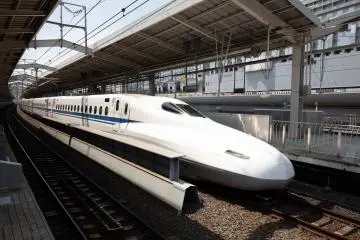
There is a specific, quiet thrill that comes with standing on a Japanese train platform. You hear the rhythmic chime of the departure melody, see the sleek, aerodynamic nose of a Shinkansen bullet train glide to a silent halt, and realize that your journey between cities is about to be just as memorable as the destination itself.
Are you planning your first trip to Japan? If so, your mind is likely buzzing with neon-lit Tokyo streets, the serene bamboo groves of Kyoto, and the hidden hot springs of Hakone. But in Japan, the "in-between" is where the magic happens.
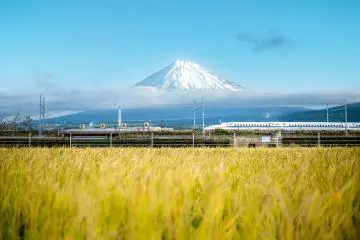
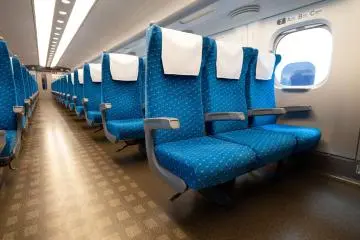
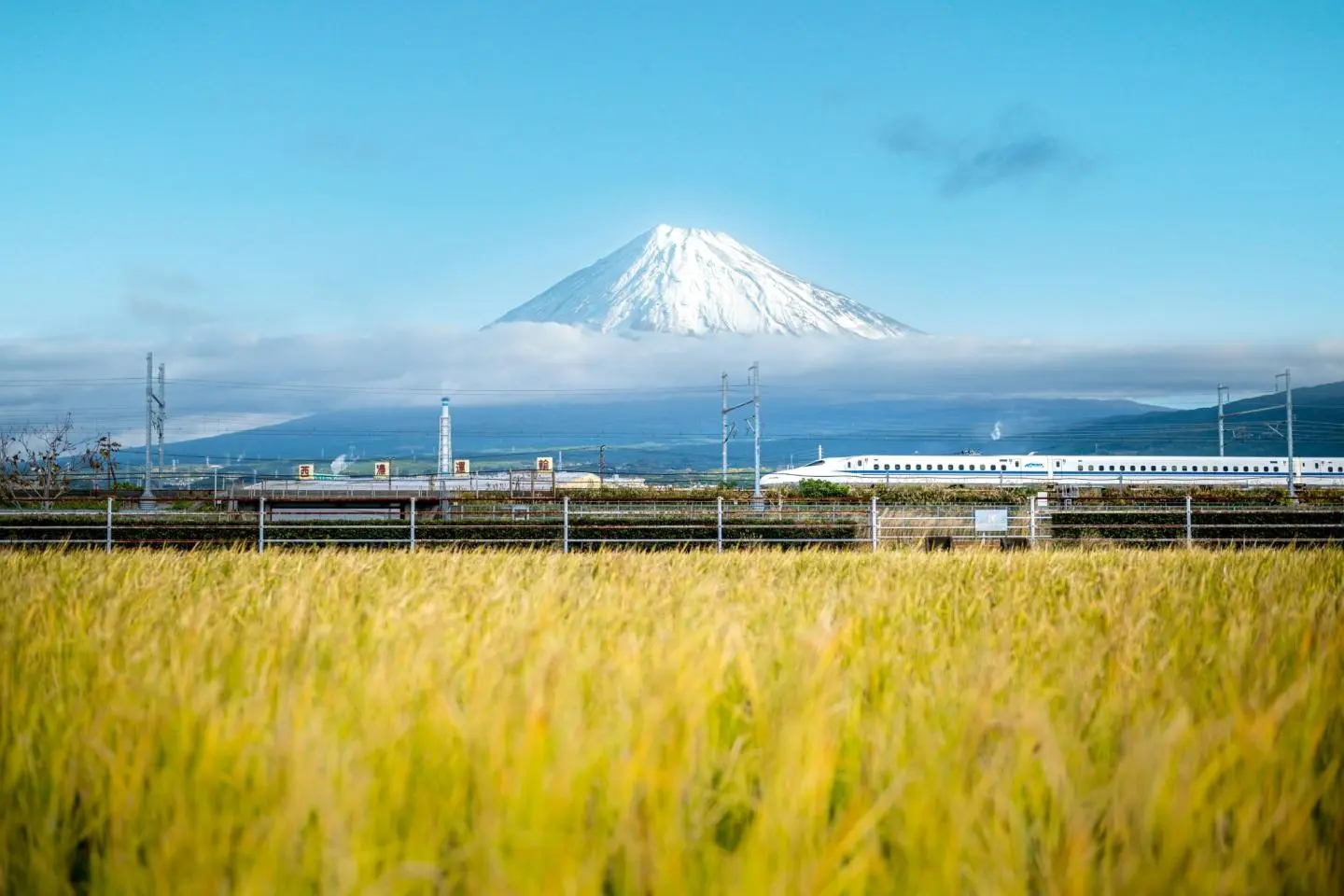
Imagine settling into a spacious, rotating seat with a beautifully arranged ekiben (station bento box) on your tray, watching the snow-capped peak of Mt. Fuji or the blur of rural rice fields race past your window at 320km/h. Far from being a logistical chore, traveling between Japan’s iconic hubs—Tokyo, Hakone, Kyoto, and Osaka—is a seamless extension of the Japanese experience: efficient, incredibly comfortable, and surprisingly easy to navigate.
To help you move like a local, we’ve put together this guide to Japan’s world-class transportation network. We’ll also show you how to use modern tools like Omio to bypass the usual booking headaches, so you can focus on the sights, not the stress.
Let’s get you on the tracks to becoming a seasoned Japan traveler!
Japan: A well-connected land of trains and buses
If you are traveling to Japan, you have likely heard of its world-renowned public transportation. The country’s extensive web of high-speed trains (shinkansen) and highway buses, as well as local trains and buses, offers you plenty of options to travel within your budget and time constraints.
Some of the most popular modes of transportation for long-distance travel are:
- Shinkansen (high-speed trains / bullet trains): These train lines, operated by Japan Railways (JR), run at speeds of up to 320 km/h (199 mph) and are known for their efficiency and spacious comfort. In fact, shinkansen travel is an experience unto itself. We recommend buying a train station bento lunch to enjoy as you admire sweeping views of Japan’s urban life and countryside. While the Japan Rail Pass is famous, buying single tickets is often cheaper for simple itineraries like Tokyo-Kyoto.
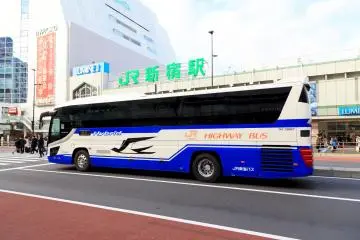
- Highway buses: These buses serve as less expensive alternatives to shinkansen or train travel, and although they are slower, they are typically much more affordable. For longer journeys, overnight buses can get you to your destination by morning. Also, the vehicles’ spacious under-bus storage areas ensure that there is plenty of room to store your luggage.
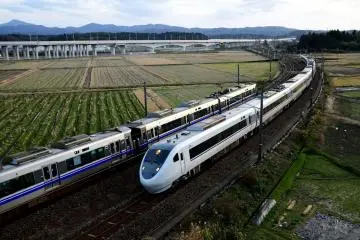
- Limited-Express trains: Limited-Express trains are the next fastest trains after shinkansen and only stop at major stations. Like shinkansen, they are spacious and typically have wide windows to enjoy the passing scenery. These trains serve as great ways to reach destinations that are not serviced by shinkansen.
For shorter distances or local travel, you can ride:
- Express, Rapid, or Local trains: These trains are defined by the number of stations they stop at. Express trains stop at the fewest number of stations, followed by rapid and then local trains. Be sure to review the trains’ routes in advance to make sure that a given train does not skip your intended destination.
- Local buses: Local buses are an excellent way to explore a specific area on a smaller scale.
As you can see, Japan’s public transportation options are plentiful!
Pro Tip for Smooth Travels: While Japan's transport is efficient, booking can be tricky for international visitors due to "glitchy" sites or rejected credit cards. For a seamless start, Omio allows you to compare Shinkansen and bus prices side-by-side and pay in your own currency.
How to buy train tickets in Japan
With a little pre-planning, paying for transportation in Japan is easy. Below, we will outline the basic need-to-knows of train and bus travel. Search routes now with the booking widget below, adjusting the cities and dates as necessary.
How to buy shinkansen (bullet train) tickets
When traveling on the Tokaido Shinkansen between Tokyo, Kyoto, and Osaka, you generally need two components: a base fare ticket and a limited express ticket.
Seat Classes:
- Reserved Seat: Guarantees your spot. Highly recommended during peak seasons (Cherry Blossom, Golden Week).
- Non-Reserved: Cheaper, but first-come, first-served. You risk standing for the 2.5-hour journey to Kyoto.
- Green Car: Japan’s version of First Class. Offers wider seats, more legroom, and a quieter atmosphere.
Oversized Luggage: If your bag’s total dimensions (H+W+D) are between 160cm and 250cm, you must book a seat with an oversized baggage area, or face a fine.
You can purchase shinkansen tickets at ticket counters and ticket machines at major stations. While most ticket machines are available in English, they can sometimes be confusing, so we recommend that first-time travelers purchase their tickets at a ticket counter. At popular tourist stations, the staff usually speak English. Similarly, at touristy stations, there are often staff posted beside ticket gates to ensure that you insert the tickets into the gate correctly—i.e., you insert both tickets at the same time.
While official apps like SmartEX exist in English, they can be glitchy with foreign credit cards and complex to navigate. For a more reliable digital experience, many travelers now use Omio to secure mobile tickets in advance, bypassing the station lines entirely.
Suica vs. PASMO: Using IC cards
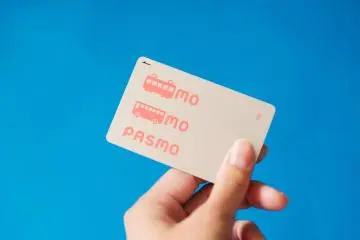
For travel on express, rapid, and local trains, as well as local buses, we highly recommend purchasing an IC Card. These prepaid, rechargeable cards facilitate seamless travel and eliminate the need for paper tickets. Simply tap the IC Card at a ticket gate or at the entrance of a bus, and you are good to go. Japan has numerous IC Card options, including SUICA and PASMO, that are usable in Tokyo, Hakone, Kyoto, and Osaka. In addition to travel, you can also use these cards at select vending machines, shops, and restaurants.
You can purchase and recharge IC Cards at most ticket machines and ticket counters at major stations. They initially require a ¥500 refundable deposit and a charge amount. PASMO and SUICA are also available as mobile apps (Apple Pay / Google Wallet). While almost all iPhones (8 or later) work, many Android phones purchased outside of Japan may not be compatible with the mobile tap-to-pay system. If you are an Android user, we recommend getting a physical card to be safe.
Limited-Express train tickets
To ride a Limited-Express train, you must also buy two tickets—a base fare and a limited express fee ticket.
- Base fare ticket: You can pay for the base fare with a paper ticket or an IC Card (if the departure and arrival stations are in the same IC Card area).
- Limited express fee ticket: You can purchase the limited express fee paper ticket at a ticket office or machine. It is common practice to buy the base fare and limited express fee tickets at the same time.
Seat reservations vary by train—some require a reservation, while others offer non-reserved seating. If seat reservations are available/required, you can choose your seat during the limited express fee ticket purchase. Green car seating is also available on select trains.
Highway bus tickets
Japan is home to a wide variety of highway bus companies, keeping tickets competitive and affordable. Typically, you can purchase highway bus tickets at major bus terminals and online. However, please note that the process for buying tickets varies depending on the company.
For online purchases, we recommend Omio as they are user-friendly and available in English. Another easy option is a JR bus since you can often purchase tickets at ticket counters in JR stations. Willer Express is another popular highway bus operator that can be booked via Omio.
Please note that highway bus ticket prices often fluctuate based on the day and time of year.
Discount rail and bus passes
In this guide, we will not go into detail about discount rail and bus passes, but please note that Japan offers a plethora of options, including the popular JR Pass. Check out the Omio Japan Rail Pass guide for more information.
Pro tip: The easiest way to book online
While buying tickets at the station is reliable, it can be stressful if there is a long line or a language barrier. Furthermore, official Japanese booking websites can sometimes be tricky to navigate and may reject foreign credit cards.
For a smoother experience, we recommend using Omio.
Omio is a comprehensive travel app that allows you to compare and book trains and buses in your own language. It solves three major headaches for first-time visitors:
- All-in-One Comparison: You can see Shinkansen and Highway Bus options side-by-side. This is perfect for deciding if saving money on a bus is worth the extra travel time compared to the bullet train.
- Hassle-Free Payment: You can pay in your home currency using your preferred payment method, bypassing the common issue of Japanese sites rejecting international cards.
- Mobile Tickets: Keep your itinerary organized on your phone rather than juggling multiple paper tickets.
Tokyo to Kyoto & Osaka: Best routes & prices
Since this article is a first-timer’s guide to travel in Japan, we will be focusing on travel between some of the country’s most popular destinations: Tokyo, Hakone, Kyoto, and Osaka. For these routes, the Tokaido Shinkansen, which connects Tokyo to numerous spots in Western Japan, is the most convenient form of train travel. We will also explore highway bus options.
*Prices and travel times are accurate as of February 2026
Tokyo → Hakone
| Transport Mode | Route | Time | Cost (JPY) | Notes |
| Bullet Train | Shinkansen to Odawara | ~55 min | ~¥4,000 | Requires transfer to local train |
| Limited Express | "Romancecar" (from Shinjuku) | ~1 hr 30 min | ~¥2,470 | Direct (No transfers) |
| Local Train | Odakyu Line (from Shinjuku) | ~2 hrs | ~¥1,270 | Cheapest option |
| Transport Mode | Service Name | Travel Time (Approx.) | Cost (JPY) | Best For... |
| Shinkansen | Nozomi / Hikari | ~2 hrs 15 min | ~¥14,000 | Speed & Comfort |
| Shinkansen | Kodama (Slow) | ~3 hrs 40 min | ~¥10,800* | Budget Rail Travel |
| Highway Bus | Day Bus | ~8 hrs | ~¥5,000 | Backpackers |
| Night Bus | Overnight | ~8–9 hrs | ~¥6,000+ | Saving on Hotels |
*The ~¥10,800 price typically refers to the 'Platt Kodama' economy plan, which must be purchased at least one day in advance.
| Transport Mode | Service Name | Travel Time (Approx.) | Cost (JPY) | Best For... |
| Shinkansen | Nozomi (Fastest) | ~2 hrs 30 min | ¥14,920 | Speed |
| Shinkansen | Hikari | ~3 hrs | ¥14,400 | JR Pass Holders |
| Highway Bus | Day Bus | ~9 hrs | ¥4,500+ | Budget Travelers |
| Night Bus | Overnight | ~9–10 hrs | ¥5,500+ | Saving Hotel Costs |
Hakone → Kyoto
| Transport Mode | Route | Travel Time (Approx.) | Cost (JPY) | Notes |
| Shinkansen | Odawara Stn → Kyoto Stn | ~2 hrs 15 min | ¥12,400 | Fastest. Requires getting to Odawara first.* |
| Night Bus | Odawara → Kyoto | ~8 hrs | ¥5,000+ | Limited departures per day. |
Kyoto → Osaka
| Transport Mode | Service Name | Travel Time (Approx.) | Cost (JPY) | Best For... |
| Local Train | JR Special Rapid | ~29 min | ¥580 | Best Value & Speed |
| Shinkansen | Tokaido Line | ~14 min | ¥1,450 | Use only with JR Pass |
| Private Rail | Hankyu / Keihan | ~45–50 min | ¥400–¥500 | Staying near Gion or Downtown |
After you select your desired travel option, you can purchase the tickets through Omio or via the numerous aforementioned options.
Traveling in Japan: You got this!
We get it, traveling in a foreign country can be intimidating, and it can be difficult to know what options and prices are available. We hope this guide helped ease your worries. Traveling in Japan is relatively straightforward, especially when you are visiting some of its most renowned destinations. The well-connected trains and buses, as well as multi-lingual services, ensure that you can find the perfect fit for your time and budget.
So, now that you have mastered the logistics of traveling, get back to crafting your ultimate itinerary. Japan cannot wait to meet you.
This article was produced in collaboration with Omio.