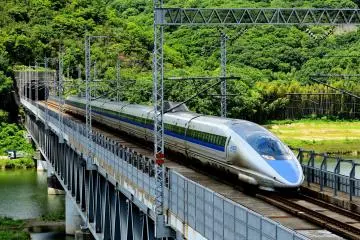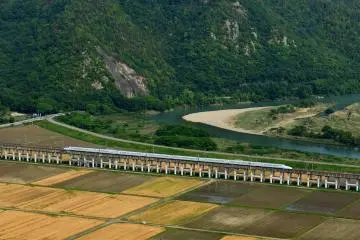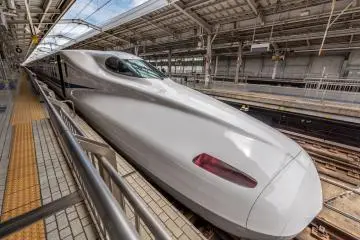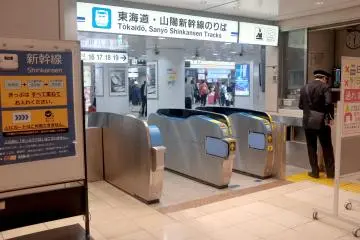
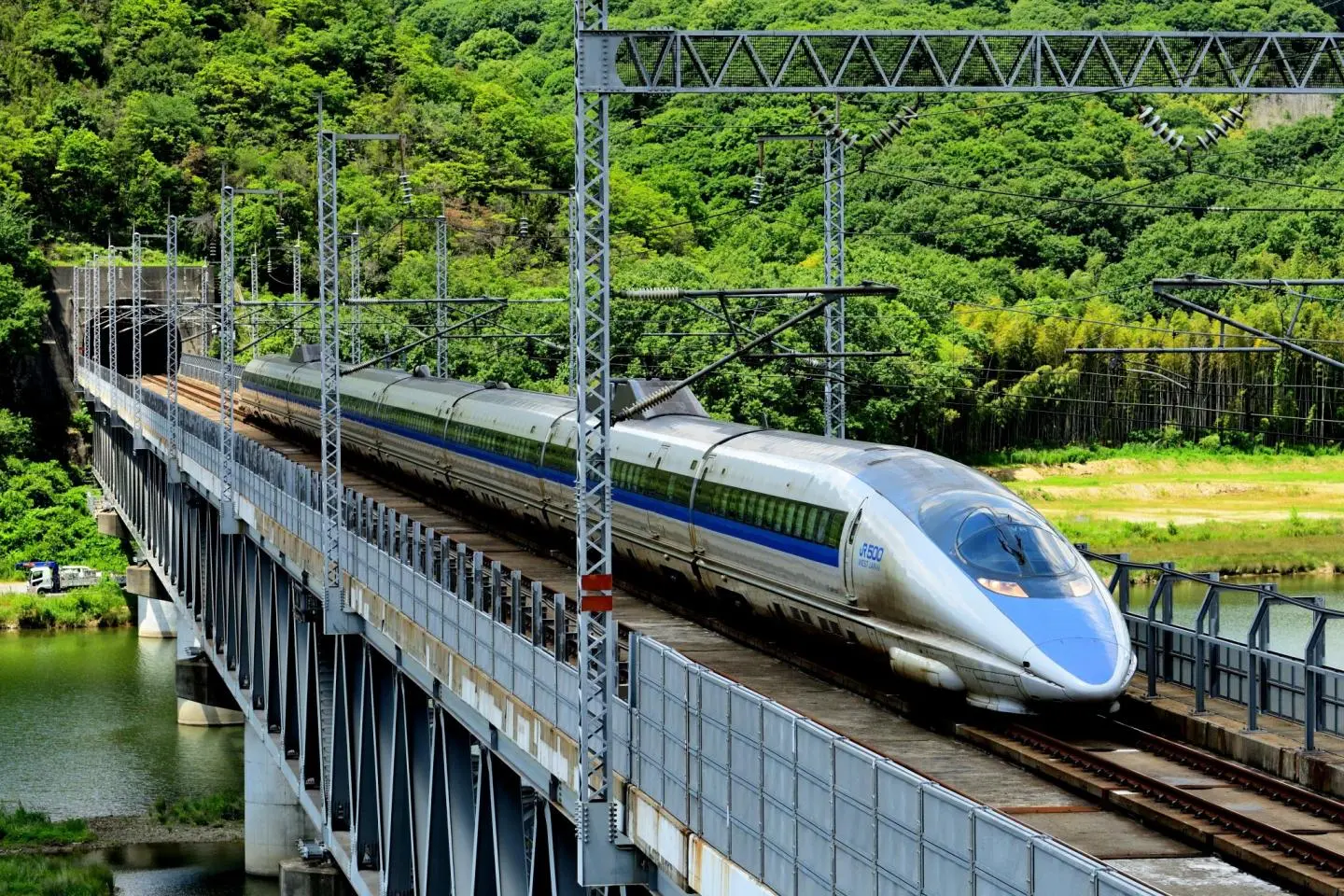
The Sanyo Shinkansen Line is one of Japan’s most important high-speed bullet train routes, linking the Kansai region with western Honshu and northern Kyushu. Running between Shin-Osaka Station in Osaka and Hakata Station in Fukuoka, the line plays a central role in both domestic travel and international tourism, connecting major business hubs, historic cities, and cultural landmarks.
Join us as we hop onto the Sanyo Shinkansen Line, sharing all the details you need to know as we ride the rails.
What is the Sanyo Shinkansen?
The Sanyo Shinkansen officially opened in two stages:
- Shin-Osaka to Okayama in 1972
- Okayama to Hakata in 1975
This marked the completion of the full Sanyo Shinkansen route, finished just in time for the Osaka Expo era of rapid infrastructure expansion (Taniguchi, 2025).
At approximately 553 kilometers (344 miles) in length, the Sanyo Shinkansen is operated primarily by JR West, with through services continuing onto the Tokaido Shinkansen (toward Tokyo) and the Kyushu Shinkansen (toward Kagoshima-Chuo).
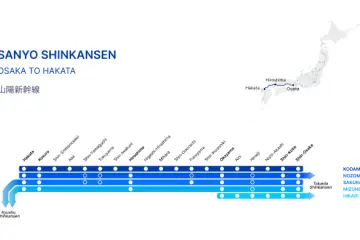
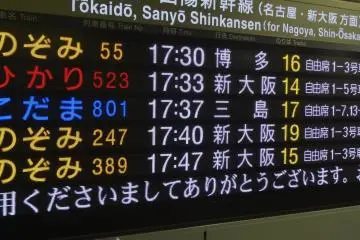
One of the most interesting aspects of the Sanyo Shinkansen is its variety of services. From ultra-fast business-oriented trains like Nozomi and Mizuho to all-stop Kodama services ideal for sightseeing, the line offers flexibility for every type of traveler.
It is also home to some of the fastest scheduled train speeds in Japan, with the N700 series reaching up to 300 km/h (186 mph) on certain sections (Wikipedia: N700 Series Shinkansen).
 Get your JR Pass on Klook
 Where does the Sanyo Shinkansen stop?
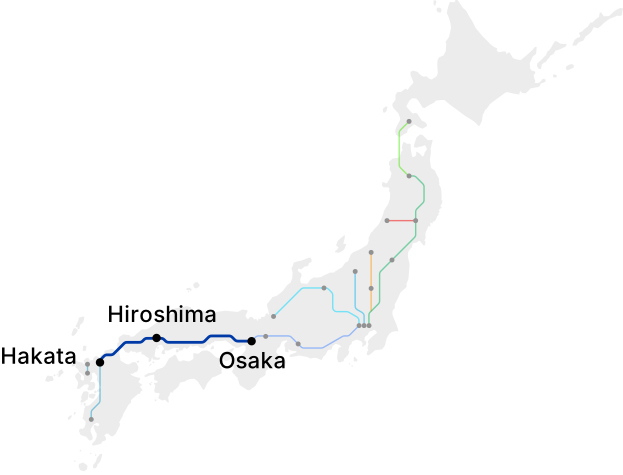
The Sanyo Shinkansen connects Shin-Osaka in Kansai with Hakata in Kyushu, stopping at major cities across western Japan.
Sanyo Shinkansen Stops: Stations along the Route
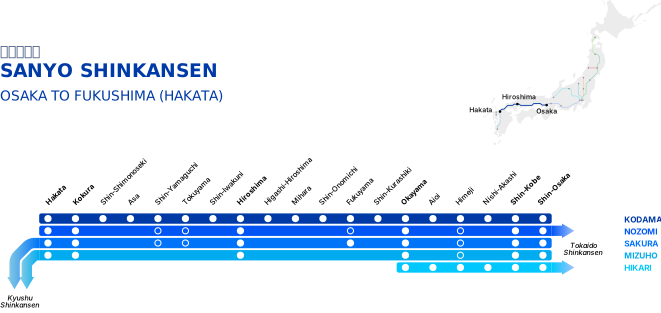
The line begins at Shin-Osaka Station, a major transfer hub for the Tokaido Shinkansen and JR conventional lines, and ends at Hakata Station, Kyushu’s largest rail terminal. Along the way, it serves important urban, cultural, and industrial centers in Hyogo, Okayama, Hiroshima, and Yamaguchi Prefectures.
Below is a simplified overview of stations and key transfer options.
| Station | Prefecture | Major Transfers |
| Shin-Osaka | Osaka | Tokaido Shinkansen, JR Kyoto Line |
| Shin-Kobe | Hyogo | Kobe Subway, JR Kobe Line |
| Nishi-Akashi | Hyogo | JR Kobe Line |
| Himeji | Hyogo | JR Sanyo Main Line |
| Aioi | Hyogo | JR Ako Line |
| Okayama | Okayama | Seto-Ohashi Line, JR Shikoku access |
| Shin-Kurashiki | Okayama | JR Sanyo Main Line |
| Fukuyama | Hiroshima | JR Fukuen Line |
| Shin-Onomichi | Hiroshima | JR Sanyo Main Line |
| Mihara | Hiroshima | JR Kure Line |
| Higashi-Hiroshima | Hiroshima | Local buses |
| Hiroshima | Hiroshima | JR Sanyo Line, Hiroshima Electric Railway |
| Shin-Iwakuni | Yamaguchi | JR Gantoku Line |
| Tokuyama | Yamaguchi | JR Sanyo Line |
| Shin-Yamaguchi | Yamaguchi | JR Yamaguchi Line |
| Asa | Yamaguchi | JR Mine Line |
| Shin-Shimonoseki | Yamaguchi | JR Sanyo Line |
| Kokura | Fukuoka | JR Kagoshima Line |
| Hakata | Fukuoka | Kyushu Shinkansen, Fukuoka Subway |
Trains on the Sanyo Shinkansen Line
There are a number of different train types available on the Sanyo Shinkansen Line.
Nozomi
The Nozomi is the fastest and most frequent service on the Sanyo Shinkansen, stopping only at major stations.
- Stops at: Shin-Osaka, Shin-Kobe, Okayama, Hiroshima, Kokura, Hakata
- Departures: Up to four per hour during peak times
- Travel time: About two hours, 30 minutes (Shin-Osaka → Hakata)
- Average ticket price: ¥15,000–¥16,500 (reserved)
- Intersects with: Tokaido Shinkansen (Tokyo)
- JR Pass: Not covered by the nationwide JR Pass
- Regional passes: Covered by some JR West regional passes
- Unreserved cars: Usually Cars 1–2 (may vary seasonally)
Nozomi trains prioritize speed and business travel and are often crowded during weekday rush hours.
Hikari
The Hikari offers a balance between speed and coverage, stopping at more stations than Nozomi.
- Stops at: Major stations including Himeji and Fukuyama
- Departures: About one to two per hour
- Travel time: Around three hours (Shin-Osaka → Hakata)
- Average ticket price: ¥14,700–¥16,000
- JR Pass: Fully covered
- Unreserved cars: Typically Cars 1–5
Hikari trains are popular with Japan Rail Pass holders looking for a faster alternative to Kodama without extra fees.
Kodama
The Kodama stops at every station on the Sanyo Shinkansen Line.
- Stops at: All stations
- Departures: About one to two per hour
- Travel time: Approximately four to five hours end-to-end
- Average ticket price: ¥14,700 (unreserved)
- JR Pass: Fully covered
- Unreserved cars: Usually Cars 1–7
Kodama services are ideal for travelers planning to explore smaller cities like Onomichi or Iwakuni.
Find out more: Explore Iwakuni with this Yamaguchi Itinerary
Sakura
The Sakura is a mid-speed service jointly operated by JR West and JR Kyushu.
- Stops at: Major and mid-sized stations
- Departures: About two per hour
- Travel time: Around two hours, 45 minutes
- JR Pass: Covered
- Unreserved cars: Typically Cars 1–3
Sakura trains offer comfortable seating and are a favorite among tourists traveling between Osaka and Kyushu.
Mizuho
The Mizuho is the fastest service connecting Kansai and Kyushu.
- Stops at: Major stations only
- Departures: About six round trips per day
- Travel time: About two hours, 20 minutes
- JR Pass: Not covered by nationwide JR Pass
- Unreserved cars: Limited or none, depending on schedule
Source: JR West Timetables
Sanyo Shinkansen: Ticket Prices
Ticket prices on the Sanyo Shinkansen depend on distance, seat type, and train category.
For the full route from Shin-Osaka to Hakata, fares typically range from:
- ¥14,700–¥15,500 for unreserved seats
- ¥15,500–¥16,500 for reserved seats
- ¥21,000–¥22,500 for Green Car seats
Unreserved seats are the most economical choice and do not require advance booking, while Green Car tickets provide wider seating, more legroom, and a quieter environment.
Prices may vary slightly depending on the train (Nozomi, Sakura, Hikari, etc.) and seasonal demand.
For the most accurate and up-to-date fares, travelers should check the official JR West website, SmartEX booking platforms, or tap the Klook button below for limitless exploration with a JR Rail Pass.
Which passes cover the Sanyo Shinkansen?
Here is a table of the available rail passes in Japan, and their coverage on the Sanyo Shinkansen Line.
| Rail Pass | Coverage on Sanyo Shinkansen |
| Japan Rail Pass (Nationwide) | The Sanyo Shinkansen line is fully covered by the JR Pass on Sakura, Hikari, and Kodama services. Fares for Nozomi and Mizuho Shinkansen are not fully covered. JR Pass holders can ride these shinkansen services paying a supplemental fee. |
| Hiroshima–Yamaguchi Area Pass | Partial coverage between Mihara and Hakata. |
| Kansai Wide Area Pass | Covers Shin-Osaka to Okayama. |
| Kansai–Hokuriku Area Pass | Covers Shin-Osaka to Okayama. |
| Kansai–Hiroshima Pass | Partial coverage between Shin-Osaka and Hiroshima. |
| Sanyo–San’in Area Pass | Full coverage between Shin-Osaka and Hakata. |
| Sanyo–San’in Northern Kyushu Pass | Full coverage between Shin-Osaka and Hakata. |
Popular destinations on the Japanese bullet train
Does the Sanyo Shinkansen go to Tokyo?
Yes, via a through service on the Sanyo-Tokaido Shinkansen Line, allowing passengers to travel from Hakata to Tokyo without changing trains.
Does the Sanyo Shinkansen go to Osaka?
Yes. The easternmost stop on the Sanyo Shinkansen is Shin-Osaka Station, a major Shinkansen hub.
Does the Sanyo Shinkansen go to Kyoto?
Indirectly. Travelers can transfer at Shin-Osaka to reach Kyoto in about 15 minutes by local trains. Or, if on a Sanyo-Tokaido Shinkasen through-service, the bullet train will continue west to Kyoto Station.
How to use the Sanyo Shinkansen?
Boarding with QR tickets
QR tickets booked via SmartEX allow passengers to pass through Shinkansen gates by scanning a code on their smartphone. The easiest way to do this is to download the SmartEX app, then:
- Go to ‘My Trips’
- Tap ‘Details’
- Head to the ‘Display QR-Ticket’ page
- Tap ‘Display QR-Ticket’
- Scan your QR as you pass through the ticket gate
Note: After displaying your QR ticket, you can also add it to your Apple Wallet, print, send via email, or copy the URL.
Boarding with IC Card
Some SmartEX tickets can be linked to IC cards like Suica and ICOCA, enabling paperless tickets and tap-and-go entry.
Steps to linking Shinkansen tickets to your IC card
- Get your IC ID Number: Open Apple Wallet/Google Pay, tap your IC Card, select info (i), and locate the 17-digit IC card number (starts with JE). If you have a physical IC card, you can find this number on the back of the card.
- Register on your booking app:
- SmartEX (Tokaido/Sanyo/Kyushu): Download the app, register, and add your IC ID number under "My IC Card List."
- JR-EAST Train Reservation (Eki-Net): Sign up on the site and enter your IC ID when purchasing or in your profile.
- SmartEX (Tokaido/Sanyo/Kyushu): Download the app, register, and add your IC ID number under "My IC Card List."
- Link ticket to IC card: During booking, select "Use IC Card" as your ticket type.
- Boarding: Tap your phone at the Shinkansen automatic ticket gate. A seat information stub may print, but it is not required for boarding.
For more guidance, follow this Shinkansen E-Ticket Guide by JR East.
Boarding with paper tickets
Paper tickets can be purchased at ticket machines or counters and inserted at the Shinkansen gates.
Already purchased tickets? Here’s how to pick them up. You will need the pickup code (a QR code or 16 digits) and the login password (4-8 alphanumeric characters) to pick up your tickets at ticket vending machines in main JR Central, JR West, or JR Kyushu stations.
Follow the SmartEX Beginner Guide or Boarding Guide for more details.
Explore West Japan on the Sanyo Shinkansen Line
The Sanyo Shinkansen Line is one of the best ways to explore western Japan, offering speed, comfort, and exceptional reliability.
Whether you are hopping between Osaka and Hiroshima or continuing on to Kyushu, this line makes long-distance travel effortless.
For inspiration along the route, read a few of our articles about traveling through West Japan:
Sanyo Shinkansen FAQs
Is the Sanyo Shinkansen covered by JR Rail Pass?
Yes, except for Nozomi and Mizuho services. The Sakura, Hikari, and Kodama services are fully covered.
Does Sanyo Shinkansen need reservations?
Reservations are optional, as unreserved seats may be available, but recommended during busy seasons.
How early should I arrive at the Shinkansen?
Arriving 10–15 minutes early is usually sufficient, but if it’s your first time traversing a certain station, it’s recommended to arrive earlier.
Can you bring luggage on Shinkansen?
Yes, with size restrictions for oversized baggage. Passengers are generally allowed two pieces of baggage (up to 30 kg each) with total dimensions of up to 250 cm.
For bags exceeding 160 cm, you must book a seat with an "oversized baggage area" or "compartment," particularly on the Tokaido, Sanyo, and Kyushu lines.
Is the Shinkansen the fastest train in the world?
It is among the fastest, but not the fastest in the world. The top speed for Shinkansen bullet trains is around 320 km/h (200 mph), compared to the Shanghai Maglev, reaching 431 km/h (268 mp/h), currently the fastest commercial high-speed transportation.
Can I eat and drink on the Shinkansen?
Yes, eating and drinking are allowed on the Shinkansen. In fact, enjoying snacks and drinks while Japan glides by is perhaps one of life’s greatest pleasures.
What does Shinkansen mean in Japan?
Shinkansen (新幹線) literally means “new trunk line.” It is comprised of three characters: 新 (shin, new), 幹 (kan, trunk or main), and 線 (sen, line).