
“You look like a dog that’s just spotted a squirrel,” my girlfriend laughed as we climbed the narrow mountain roads into Shirakawa-go.
It was July: humid, relentless, cicadas already winding up for their daily chorus. The moment the village came into view, the heat dissolved in my mind. Steep green mountains folded inward and thatched gasshō-zukuri roofs dotted the valley. Most visitors come for the architecture, the food, the feeling of stepping sideways through time. I came for all of that too, but I also came because where there’s water, there are fish.
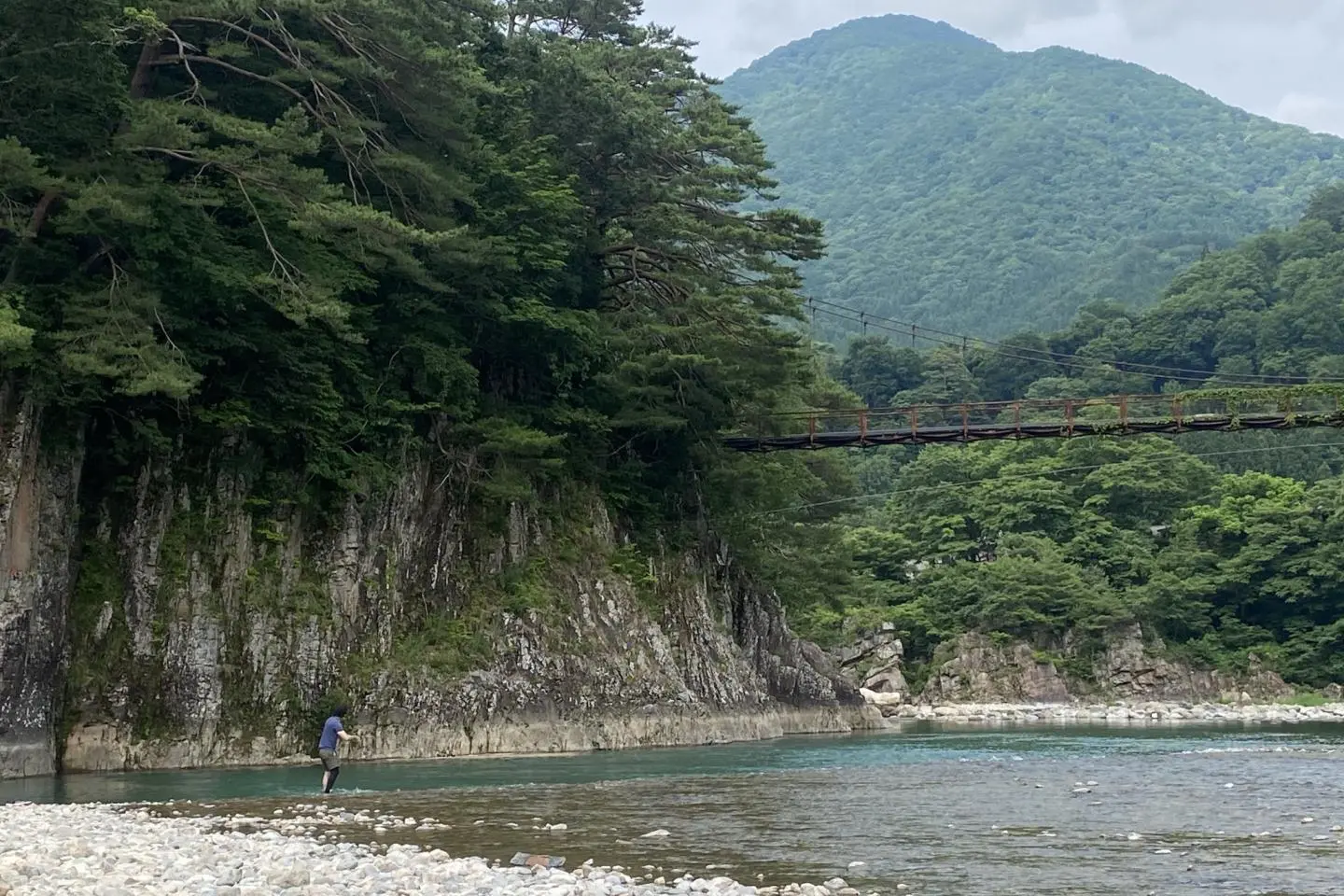
From the bus window, I watched hawk-like at the scene below: fishermen standing knee-deep in pale blue water, holding impossibly long rods with no reels at all. Fifteen feet of graphite arced toward the current. Their iconic setup betrayed what they were after: Ayu sweetfish. The emblem of summer itself, slipping through current just some small distance away.
Why Shirakawa-go Is Worth Fishing (Even If No One Talks About It)
Before the trip, I searched relentlessly. English blogs, Japanese sites, forums, and tourism pages run through translation tools. Plenty about fishing near Shirakawa-go. Plenty about ayu season and trout fishing in Japan broadly. Almost nothing about fishing inside the village itself. After opening countless tabs to the point my computer crashed, the message became clear: the village is famous, but the fishing is all local knowledge.
Shirakawa-go is not a theme park. It is a living village with rules, seasons, and expectations. Fishing is regulated, local, and it is certainly not designed with foreign anglers in mind. This all means that if you want to fish here, you need to keep your gear light, hold realistic expectations, and respect the locals (both the people and the fish!).
Shirakawa-go sits along the Shō River system, idyllic and fast-moving, fed by mountain runoff. In summer, these waters hold ayu, amago, and iwana among other freshwater prizes. That said, this is not a place where you wander down with a spinning rod and hope for the best. If you want to fish here, even for an hour, you need to arrive prepared.
The Fish: Ayu, Iwana, and Amago
While Ayu sweetfish may be the real prize to the locals in summertime, Shirakawa-go has a variety of fish to offer.
Ayu
Ayu are small, migratory fish with outsized cultural weight across all of Japan. Their season marks the transition from spring into the heavy heat of summer. Traditionally grilled whole with salt, they’re said to smell faintly of melon and cucumbers when fresh. You can find them in the markets of Tokyo or Osaka - or come here and find them fresh.
Most local anglers pursue ayu using fly rods or specific ayu rods, targeting fish that aggressively defend feeding territories.
Amago
If Shirakawa-go’s rivers have a signature trout, it’s the amago. Known as the “queen of riverfish,” amago are instantly recognizable by the faint red and black spots scattered along their flanks, as if someone brushed embers and soot across silver. They favor cold, fast mountain water and hold tight to seams beneath overhanging grass, submerged roots, and rocky juts, the same places where a careless cast may cost you a fly.
They’re also versatile on the plate: grilled whole, sliced for sashimi, or prepared as nanbanzuke, a vinegar-based dish tracing its roots back to Portuguese contact during Japan’s warring states period.
Iwana
The mountain char—dark-backed, pale-spotted, and elusive—inhabits colder, shaded stretches of river. In mountain villages, there’s an old belief that iwana can live for decades, even centuries. Some stories say an iwana that survives long enough learns to take the form of a monk, appearing to fishermen who take more than they should and urging them to return home.
It’s a fitting reminder in a place like Shirakawa-go: fish humbly, take only what’s allowed, and remember that the river was here long before you arrived.
TIP: Fishing Isn’t a Right Here
In Japan, rivers are managed communally. Fishing without permission isn’t just rude, it’s illegal. Even locals carry permits. Respect for the system is part of the experience. To get the right permits for most streams, visit the local convenience stores who can sell you a stamped piece of paper ensuring you have a successful and legal fishing trip.
Gear: What to Bring (and Why Less Is More)
I only had one day in Shirakawa-go. I arrived by bus from Kanazawa, the closest city with a direct route, at 10:00AM with my girlfriend in tow and a fixed departure time looming in the afternoon. The latest return bus we could catch was at 4:30PM. If you want more flexibility, staying overnight is worth considering. Otherwise, enjoy the village first then fit in fishing before your departure.
Rod
I brought a tenkara rod (a Nirvana Kokoro 360). Compact, lightweight, and collapsible, it fit easily into my pack and matched the local style closely enough not to draw attention. Tenkara’s simplicity also matters here. Long casts, delicate presentations, no reel noise, and no fanciness. When in Japan, fish as the Japanese do.
Flies
I carried only a few patterns, principal of which were:
-
Chernobyl ant
-
Glo bug egg
-
Zebra midge
Not knowing exactly what to expect is the hardest part. If I went back, I’d bring small streamers and a fly-tying kit. Being able to adjust quickly matters more here than having a full box.
Footwear
I wet-waded. Socks off, boots on the bank. The river is cold, clean, and deceptively slick. Water shoes may not be a bad call. In either case, be prepared to have tourists gawk as you carefully walk the rocky stream.
Permits: The Most Important Part
I realized I had a problem the moment we stepped off the bus.
“You can’t just fish without a license,” my girlfriend said. In all my excitement, I missed the most basic requirement.
In Shirakawa-go, day permits are required, and they are not sold online. There are no English signs pointing you where to go.
How to Get One
-
Go to the local convenience store, a reliable option is Daily Yamazaki Shirakawamura, about a 10–15 minute walk from the north bus stop.
-
Ask for a fishing permit. Hand gestures and translation apps help. Smiling and enthusiasm helps more.
-
Pay in cash. For about ¥1000, you’ll receive a stamped permit memento to bring home.
The clerk looked genuinely surprised when I asked for my permit. Not annoyed, just surprised and then excited. In Shirakawa-go they’re used to the tourists coming for the history, but what they love to see is some passion for the landscape and its wonders too.
TIP: Overcoming the language barrier
You don’t need fluency to make things work. What matters more is clarity of intent, patience, and a willingness to look a little foolish. The single most useful word to know is “tsuri” (fishing). Say it clearly while miming the motion of casting a rod. Add a smile and be a little excited to get out there! That combination worked far better for me than fumbling through full sentences on Google Translate.
When translation apps are necessary, keep requests short and concrete: “Can I buy a fishing permit?” works better than explanations about fly fishing or travel plans. Expect a moment of surprise (foreign anglers are rare here after all) but that surprise often turns into enthusiasm. Curiosity travels both ways.
Don’t Skip the Village
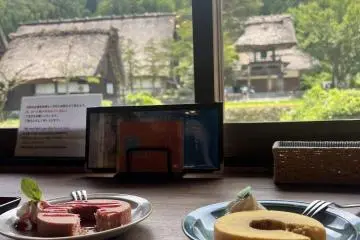
It’s worth saying plainly: even if you come to fish, take time to walk the village. Eat slowly. Drink cold tea. Try the local coffee shops, grilled river fish, or simple mountain vegetables. Visit a shrine. I paused at one and quietly thought of Ebisu, the Shinto god of fishing. Throwing in a coin to the main shrine and bowing, I wasn’t asking for a fish, exactly, but for permission to be there at all.
Ultimately, fishing fits best in Shirakawa-go when it doesn’t crowd out everything else. Stop to appreciate the scenery, and your fishing trip might just be a bit more memorable.
Where to Fish (and Where Not To)
The main village of Shirakawa-go will test your patience.
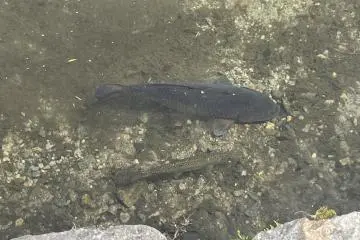
The village is threaded with canals and ponds full of carp and trout—beautiful, visible fish that you are not allowed to touch. They’re ornamental, protected, and constantly tempting.
The real fishing is in the Shō River proper.
Look for:
-
Gravel bars below bridges
-
Moderate current seams
-
Areas where locals are already standing (observe distance and etiquette)
Avoid:
-
Village canals
-
Areas marked with signage
-
Fishing directly beside another angler.
On the Water: What Actually Happens
By the time I stepped into the river, it was already mid-afternoon. Boots off, pants rolled up, and knots tied while awkwardly trying not to slip on river rocks.
Fishing has a way of revealing itself only once you stop moving. On my first few casts, starting with the ant pattern, I finally saw what I’d missed from the bank. Small trout darted between shadow and light. Larger fish held under seams, rising just enough to inspect the fly before turning away.
Eventually, one rose. Another nosed the hackle and turned away. For the next hour and a half that I had left, that pattern seemed to repeat.
Any fisherman knows, that’s how it goes some days.
Here fishing rewards stillness more than action. I learned quickly that success isn’t always measured in numbers, sometimes it’s measured in being given the chance to try.
With my bus departure looming, I watched the water one last time, then stepped back onto shore.
Leaving Empty-Handed (and Why That’s Okay)
As we drove away, I watched the ayu fishermen again, their long rods tracing arcs against stone and water. I imagined returning day after day, learning the river slowly, becoming less conspicuous.
Not every fishing day is about catching fish.
Some are about permission to stand in a place and participate, however briefly, in something older than you.
I doubt I was the first foreigner to fish Shirakawa-go, but I don’t doubt I found my own way there.
Quick Guide: Fishing Shirakawa-go at a Glance
Best Season: Summer (confirm dates for ayu season)
Target Species: Ayu, iwana, amago
Permit Required: Yes (local purchase only)
Best Gear: Tenkara rod, minimal flies
Access: Bus, Kanazawa is the best bet for a short trip.
Time Needed: 2–3 hours minimum
Getting there
Shirakawa-go is remote by design, tucked deep into the mountains of Gifu Prefecture. The most straightforward access point for travelers is Kanazawa, which serves as a regional hub with frequent bus connections.
From Kanazawa Station, direct buses run to Shirakawa-go multiple times daily, with a travel time of roughly 1 hour and 15 minutes. Seats are reserved in advance during peak season, and it’s worth booking early (especially in summer, when both tourism and fishing season overlap). The bus drops you at the Shirakawa-go Bus Terminal, right at the edge of the village.
Once you arrive, everything is walkable. The village itself is compact, with footpaths leading between gasshō-zukuri farmhouses, bridges, shrines, and river access points. That said, fishing spots along the Shō River may require a bit of walking upstream or downstream, sometimes away from the main tourist flow. Comfortable footwear matters.
If you plan to fish and sightsee in the same day, time management is critical. Buses back to Kanazawa run on a fixed schedule, with the last departures typically in the late afternoon. This shapes the entire experience: fishing here happens in stolen hours, not full days. Staying overnight nearby offers far more flexibility, but even a short window on the water can be worthwhile if you arrive prepared.
/136.90592186753,36.261417367098,9/397x132?access_token=pk.eyJ1IjoiamFwYW50cmF2ZWxtYXBzIiwiYSI6ImNqbXBtOXYxbDB5Z3ozbHFrazJuYWMwOGYifQ.v15fy_mcFWtgopmz8PhwqA)