
Yamaguchi prefecture is often overlooked by travelers, most just passing through on the bullet train between Hiroshima and Kyushu. However, this westernmost region of the main island of Honshu has much to recommend in terms of history, culture and scenery.
Surrounded on three sides by sea, Yamaguchi has nearly 1500km of coastline. It stretches from the built up Seto Inland Sea coastline (called the Sanyo Coast) across Honshu to the deserted beaches of the Japan Sea on the Sanin Coast. Its location encouraged connections with Korea and China from ancient times, making a cultural and commercial entrepôt.
The Ōuchi clan which was dominated the region for several centuries emulated the city planning of Kyoto and what is now the prefectural capital, Yamaguchi City, became known as the “Kyoto of the West”. The rule of the Ōuchi came to an end with defeat at the hands of the Sue, who were in turn pushed out by the Mōri clan in the 1550s who now became the dominant force in the Chugoku Region. After backing the wrong horse at the battle of Sekigahara in 1600, the Mōri were confined to current day Yamaguchi Prefecture. Having been denied permission to build a castle on the Inland Sea, they established their castle stronghold at Hagi on the Japan Sea.
The town prospered and remained the political and cultural center of the region for some 260 years. Hagi also produced many of the figures who would be instrumental in bringing down the Tokugawa Shogunate and in the modernization of Japan that followed. Although all that remains of the castle is the foundations in a picturesque park, the well preserved streets make Hagi a highly recommended place to include on a trip to the region and a must for Japanese history buffs. Hagi is also a well known for its hagi-yaki high quality ceramics which make excellent souvenirs.
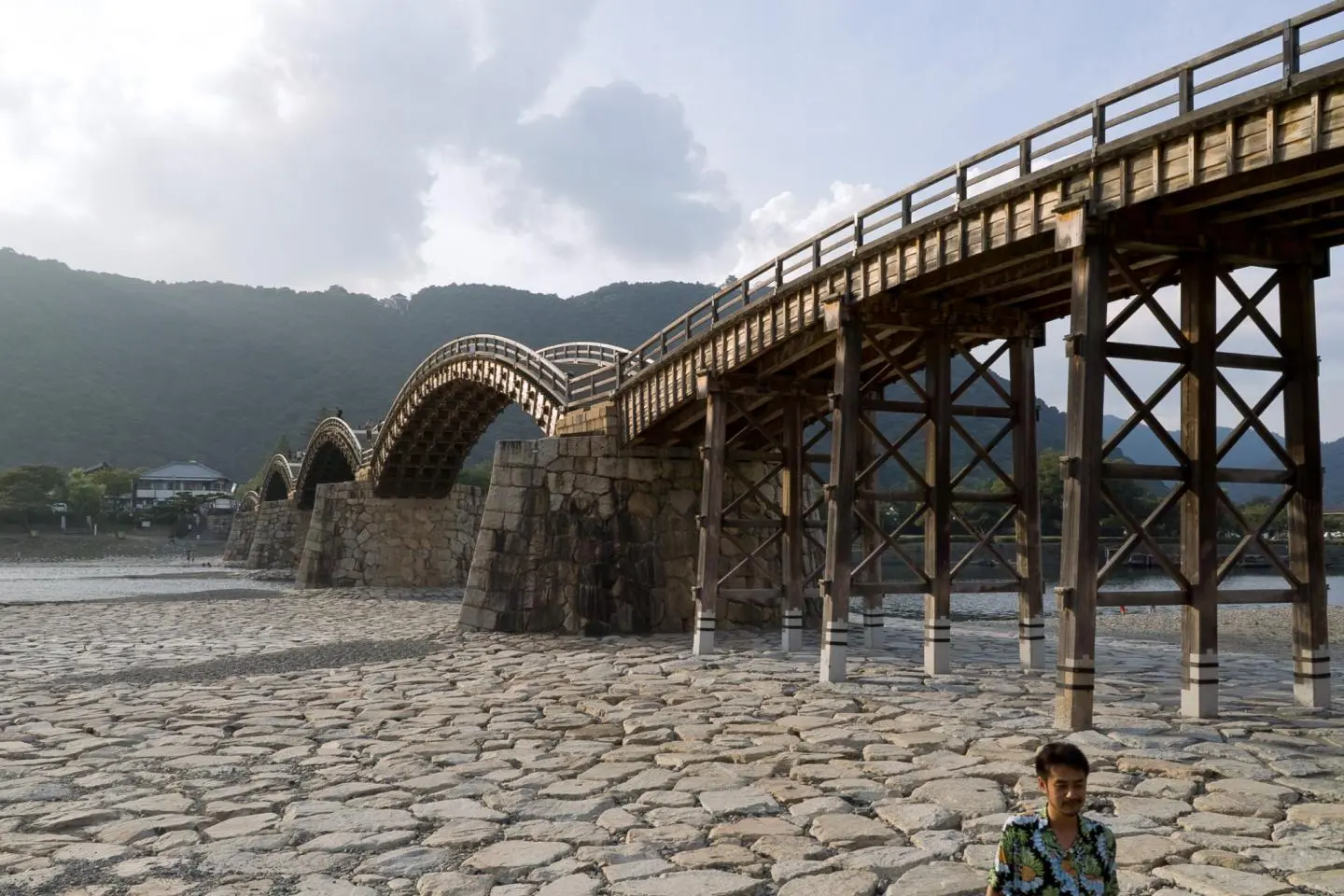
Other Yamaguchi highlights are the impressive Kintai-kyō Bridge in Iwakuni, which can be an easy day trip from Hiroshima or the first stop on a tour of the prefecture, Rurikōji Temple in Yamaguchi City, the beautiful town of Tsuwano, deep in the Chugoku mountains, and Akiyoshidai National Park which comprises the largest Karst plateau and limestone cave in the nation. The resort town of Hikari has seen better days, but has a certain charm and a lively (for the Japanese provinces) beach scene in the summer.
There are also some stunning beaches in the more remote Nagato area. The historically significant port town of Shimonoseki, which looks across the Kanmon Strait to the island of Kyushu has also developed into something of a fun destination and is worth stopping off at on the way to Kyushu, using as a base from which to explore the Nagato area, or as a departure point to Korea or China.
The energetic who want to really get off the beaten track might like to try hiking the Hagi Oukan; the route developed by the Mōri clan to link their castle town with the Sanyo coast, giving them access to the rest of Japan. Much of the original 400 year old route has been lovingly restored and makes for a beautiful, if sometimes strenuous, hike over mountains and through valleys surrounded by rice terraces.
/131.4706493,34.1859563,9/397x132?access_token=pk.eyJ1IjoiamFwYW50cmF2ZWxtYXBzIiwiYSI6ImNqbXBtOXYxbDB5Z3ozbHFrazJuYWMwOGYifQ.v15fy_mcFWtgopmz8PhwqA)