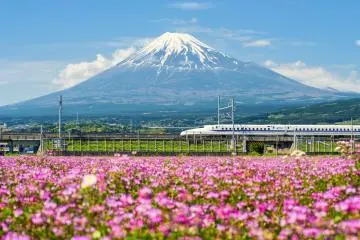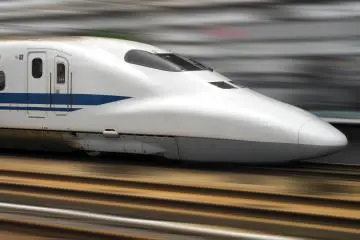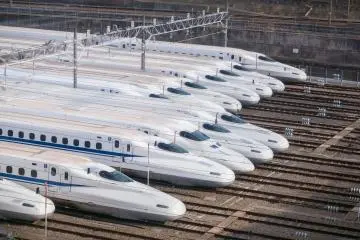
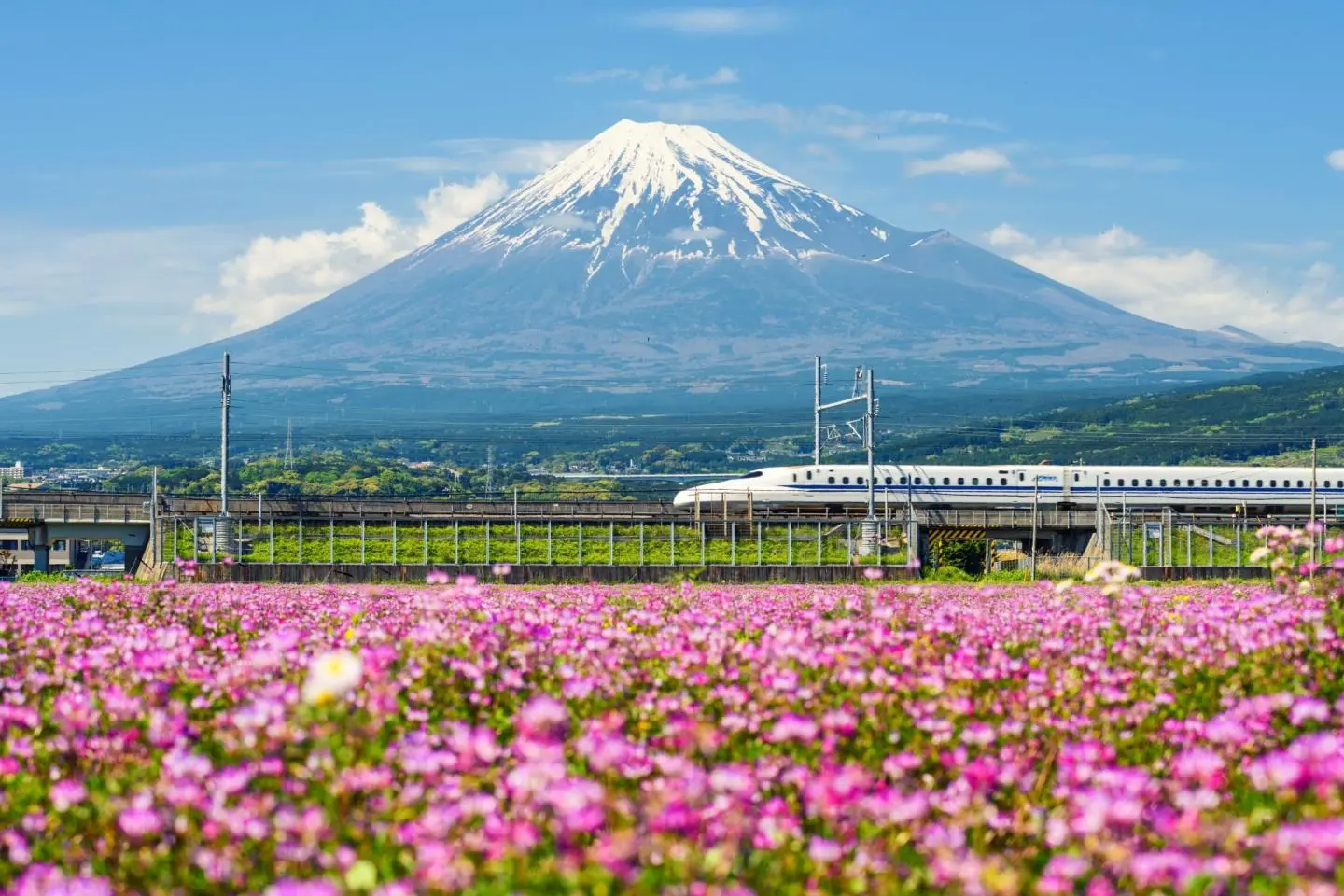
Few experiences in Japan feel quite as iconic as boarding the Shinkansen. Sleek, punctual, whisper-quiet, and astonishingly fast, Japan’s bullet trains have become a symbol of the country’s engineering excellence and attention to detail. For visitors, the Shinkansen is not just a way to get from A to B – it is often a highlight of the trip itself.
Since its debut in 1964, timed to coincide with the Tokyo Olympics, the Shinkansen has transformed domestic travel across Japan. Today, it connects major cities, regional hubs, and even snowy northern islands, making it possible to cross vast distances in a matter of hours while enjoying comfort, reliability, and impressive views along the way.
This guide is designed to give you a complete, practical understanding of the Japanese bullet train–from routes and train types to ticket prices, rail passes, and how to board with confidence, whether it’s your first ride or your fifteenth.
What is the Japanese bullet train?
The Japanese bullet train, officially known as the Shinkansen, is a network of high-speed rail lines operated primarily by the Japan Railways (JR) Group. Built on dedicated tracks separate from conventional railways, Shinkansen trains are designed to travel at extremely high speeds while maintaining exceptional safety standards.
Most Shinkansen trains operate at speeds of up to 320 km/h (about 200 mph), yet the ride feels remarkably smooth and quiet. Delays are rare, measured in seconds rather than minutes, and onboard cleanliness and comfort are famously consistent.
The Shinkansen serves both business travelers and tourists, offering reserved and non-reserved seating, spacious luggage areas, onboard restrooms, and, on many routes, food carts or easy access to bento boxes before boarding.
 Get your JR Pass on Klook
 Shinkansen bullet train routes: Where does it go?
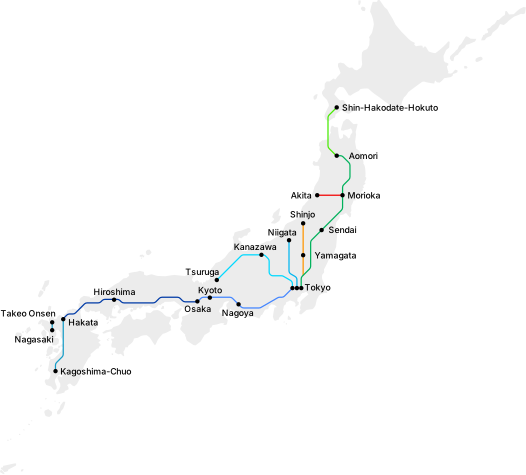
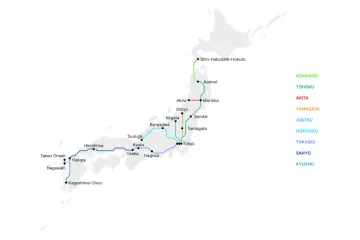
Japan’s Shinkansen network spans the length of the country, from Kyushu in the south to Hokkaido in the north. Each line serves a distinct region, with some operating as through-services that connect seamlessly with others.
Tokaido Shinkansen
The Tokaido Shinkansen is Japan’s busiest and most famous high-speed rail line. It links Tokyo with Osaka and forms the backbone of the entire Shinkansen network. This route is especially popular with international visitors, as it connects major cities, such as Yokohama, Nagoya, Kyoto, and Osaka.
Route: Tokyo – Shin-Osaka
Stops: Tokyo, Shinagawa, Shin-Yokohama, Odawara, Atami, Mishima, Shin-Fuji, Shizuoka, Kakegawa, Hamamatsu, Toyohashi, Mikawa-Anjo, Nagoya, Gifu-Hashima, Maibara, Kyoto, Shin-Osaka (Stops vary by train type.)
Sanyo Shinkansen
Extending west from Osaka, the Sanyo Shinkansen connects the Kansai region with western Honshu and northern Kyushu. This line is ideal for travelers heading to Hiroshima, Okayama, or Fukuoka (Hakata).
Route: Shin-Osaka – Hakata
Stops: Shin-Osaka, Shin-Kobe, Nishi-Akashi, Himeji, Aioi, Okayama, Shin-Kurashiki, Fukuyama, Shin-Onomichi, Mihara, Higashi-Hiroshima, Hiroshima, Shin-Iwakuni, Tokuyama, Shin-Yamaguchi, Asa, Shin-Shimonoseki, Kokura, Hakata (Stops vary by service.)
Kyushu Shinkansen
The Kyushu Shinkansen serves Japan’s southernmost main island, offering fast access to volcanic landscapes, hot spring towns, and vibrant cities like Kumamoto and Kagoshima.
Route: Hakata – Kagoshima-Chuo
Stops: Hakata, Shin-Tosu, Kurume, Chikugo-Funagoya, Shin-Omuta, Shin-Tamana, Kumamoto, Shin-Yatsushiro, Shin-Minamata, Izumi, Sendai, Kagoshima-Chuo
Akita Shinkansen
The Akita Shinkansen is a “mini-shinkansen,” meaning it runs on both high-speed and conventional tracks. It provides a scenic link between Tokyo and the rural landscapes of Akita Prefecture.
Route: Tokyo – Akita
Stops: Tokyo, Ueno, Omiya, Morioka, Shizukuishi, Tazawako, Kakunodate, Omagari, Akita
Hokuriku Shinkansen
Running through the Japanese Alps, the Hokuriku Shinkansen connects Tokyo with the Sea of Japan coast. It is popular for trips to Nagano, Kanazawa, and Toyama.
Route: Tokyo – Tsuruga
Stops: Tokyo, Ueno, Omiya, Takasaki, Karuizawa, Sakudaira, Ueda, Nagano, Iiyama, Joetsu-Myoko, Itoigawa, Kurobe-Unazukionsen, Toyama, Shin-Takaoka, Kanazawa, Komatsu, Kagaonsen, Awaraonsen, Fukui, Echizen-Takefu, Tsuruga
Joetsu Shinkansen
The Joetsu Shinkansen links Tokyo with Niigata, a region known for rice, sake, and snowy winters. It is especially popular during ski season.
Route: Tokyo – Niigata
Stops: Tokyo, Ueno, Omiya, Kumagaya, Honjo-Waseda, Takasaki, Jomo-Kogen, Echigo-Yuzawa, Urasa, Nagaoka, Tsubamesanjo, Niigata
Tohoku Shinkansen
The Tohoku Shinkansen travels deep into northeastern Japan, offering access to historic cities, hot springs, and dramatic seasonal scenery of places like Aomori, Morioka, and Fukushima.
Route: Tokyo – Shin-Aomori
Stops: Tokyo, Ueno, Omiya, Utsunomiya, Koriyama, Fukushima, Shiroishi-Zao, Sendai, Furukawa, Kurikoma-Kogen, Ichinoseki, Mizusawa-Esashi, Kitakami, Shin-Hanamaki, Morioka, Iwate-Numakunai, Ninohe, Hachinohe, Shichinohe-Towada, Shin-Aomori
Yamagata Shinkansen
Another mini-shinkansen route, the Yamagata Shinkansen provides a comfortable connection between Tokyo and Yamagata’s mountainous interior.
Route: Tokyo – Shinjo
Stops: Tokyo, Ueno, Omiya, Utsunomiya, Koriyama, Fukushima, Yonezawa, Takahata, Akayu, Kaminoyama-Onsen, Yamagata, Tendo, Sakuranbo-Higashine, Murayama, Oishida, Shinjo
Hokkaido Shinkansen
The newest addition to the network, the Hokkaido Shinkansen connects Honshu with Japan’s northern island via the Seikan Tunnel beneath the sea.
Route: Tokyo – Shin-Hakodate-Hokuto
Stops: Tokyo, Ueno, Omiya, Sendai, Morioka, Shin-Aomori, Okutsugaru-Imabetsu, Kikonai, Shin-Hakodate-Hokuto
Types of Japanese bullet train
Nozomi
The fastest service on the Tokaido and Sanyo Shinkansen, stopping at major stations only. Not covered by the standard JR Pass.
Mizuho
A high-speed service on the Sanyo and Kyushu Shinkansen, similar to Nozomi in speed and station coverage. Also excluded from the standard JR Pass.
Hikari
A slightly slower alternative to Nozomi on the Tokaido and Sanyo lines, stopping at more stations and fully covered by the JR Pass.
Sakura
A fast and comfortable service operating mainly on the Sanyo and Kyushu Shinkansen, offering a balance between speed and coverage.
Kodama
The slowest Shinkansen service, stopping at every station along the route. Ideal for flexible travel and short hops between nearby destinations.
Shinkansen Prices
Shinkansen ticket prices across Japan vary based on distance, seat class, train category, and season. On most major routes, typical one-way fares fall within these ranges:
- ¥5,000–¥10,000 for shorter intercity trips
- ¥13,000–¥20,000 for medium to long-distance routes
- ¥20,000+ for the longest journeys (e.g., Tokyo to Kyushu)
By seat type, you can generally expect:
- Unreserved seats: most economical; flexible boarding without advance booking
- Reserved seats: slightly higher cost with guaranteed seating
- Green Car: premium carriage with wider seats, extra legroom, and a quieter atmosphere
Prices also vary by train type (Nozomi, Hikari, Sakura, etc.) and peak travel periods.
For the most accurate and up-to-date fares, travelers should check the official JR West website, SmartEX booking platforms, or tap the Klook button below for limitless exploration with a JR Pass.
Shinkansen JR Pass: Which passes cover the bullet train?
Here is a table of the available rail passes in Japan, and their coverage on the Shinkansen Line.
| Pass Type | Coverage Area | Shinkansen Access | Nozomi/Mizuho Included? | Best For |
| Japan Rail Pass (Nationwide) | All JR regions nationwide | Most Shinkansen lines | ❌ Not included (except special add-on tickets) | First-time visitors travelling long distances |
| JR East Pass (Tohoku area) | Eastern Japan (Tokyo–Tohoku) | Tohoku, Joetsu, Hokuriku (JR East sections) | ❌ Not included | Trips north from Tokyo |
| JR East Pass (Nagano/Niigata) | Tokyo, Nagano, Niigata | Hokuriku & Joetsu Shinkansen | ❌ Not included | Nagano ski or regional trips |
| JR West Rail Pass (Kansai–Hiroshima, etc.) | Western Japan | Sanyo & Hokuriku (JR West sections) | Some passes allow Sakura/Hikari only | Kansai and western Honshu travel |
| JR Kyushu Rail Pass | Kyushu island | Kyushu Shinkansen | ❌ Not included | Exploring Kyushu |
| JR Hokkaido Rail Pass | Hokkaido | Hokkaido Shinkansen (within region) | ❌ Not included | Northern Japan travel |
Source: Japan Rail Pass
Key tip: Most passes do not cover the fastest Nozomi and Mizuho trains without an additional supplement, so always check before booking.
Booking Shinkansen tickets
To ride the Shinkansen, passengers typically need two components: a base fare ticket and a limited express ticket. The final price depends on several factors:
- Seat reservation: Most Shinkansen services offer both reserved and non-reserved seating. Reserved seats cost more but guarantee a specific seat, which is highly recommended during peak travel periods.
- Green Car seating: Upgrading to the Green Car increases the fare, but provides a more spacious and premium travel experience.
- Type of Shinkansen: Faster services, such as Nozomi on the Tokaido Line, usually cost more than slower options like Hikari or Kodama.
Buying Shinkansen tickets at a station
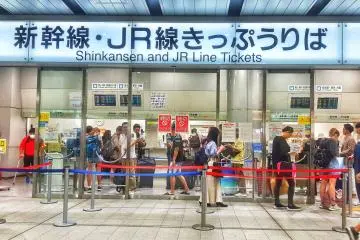
Tickets can be purchased at JR ticket counters or vending machines at major stations. While machines support English, first-time travelers may find it easier to speak with station staff.
At busy stations, staff members often assist passengers at the gates to ensure tickets are inserted correctly.
Buying Shinkansen tickets online
Online booking services and IC-compatible options are available, but many platforms operate primarily in Japanese. For simplicity, many visitors choose to book in person, through a travel agency, or via international booking platforms.
How to use the Japanese bullet train?
Riding the Shinkansen is straightforward once you understand the boarding process. Whether using digital tickets, IC cards, or paper tickets, the steps are clearly signposted in English at major stations.
Boarding with QR tickets
QR tickets booked through SmartEX allow passengers to enter Shinkansen gates by scanning a code on their smartphone. After installing the SmartEX app:
- Open My Trips
- Select Details
- Navigate to Display QR-Ticket
- Scan the code at the Shinkansen gate
You can also save the QR code to Apple Wallet, print it, or share it via email.
Boarding with IC Card
Some SmartEX tickets can be linked to IC cards like Suica and ICOCA, enabling paperless tickets and tap-and-go entry.
Steps to linking Shinkansen tickets to your IC card
- Get your IC ID Number: Open Apple Wallet/Google Pay, tap your IC Card, select info (i), and locate the 17-digit IC card number (starts with JE). If you have a physical IC card, you can find this number on the back of the card.
- Register on your booking app:
- SmartEX (Tokaido/Sanyo/Kyushu): Download the app, register, and add your IC ID number under "My IC Card List."
- JR-EAST Train Reservation (Eki-Net): Sign up on the site and enter your IC ID when purchasing or in your profile.
- SmartEX (Tokaido/Sanyo/Kyushu): Download the app, register, and add your IC ID number under "My IC Card List."
- Link ticket to IC card: During booking, select "Use IC Card" as your ticket type.
- Boarding: Tap your phone at the Shinkansen automatic ticket gate. A seat information stub may print, but it is not required for boarding.
For more guidance, follow this Shinkansen E-Ticket Guide by JR East.
Boarding with paper tickets
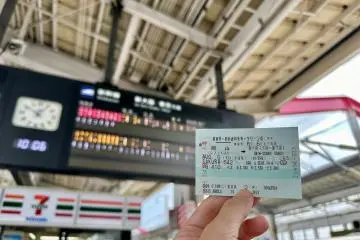
Paper tickets can be bought at ticket counters or machines and inserted into the Shinkansen gates. Travelers collecting pre-booked tickets can retrieve them from vending machines at major JR stations.
You will need your pickup code (a QR code or 16 digits) and login password (4-8 alphanumeric characters).
Follow the SmartEX Beginner Guide or Boarding Guide for more details.
Riding the bullet train across Japan
The Shinkansen is more than just transportation–it is an experience that showcases Japan’s dedication to efficiency, comfort, and innovation. Whether you are traveling between major cities or exploring regional destinations, the bullet train makes getting around Japan seamless and enjoyable.
Shinkansen bullet train FAQs
Are Nozomi and Mizuho Shinkansen covered by the JR Pass?
No. These fastest services are excluded from the standard JR Pass, though other high-speed alternatives are available.
Can I make seat reservations on Shinkansen bullet trains?
Yes. Seat reservations can be made in advance or at stations, and are recommended during busy travel periods.
Can you use Suica for Shinkansen?
Yes. Certain tickets can be linked to Suica or other IC cards, allowing tap-and-go access.
I left something on the Shinkansen. What should I do?
Contact station staff immediately or visit a JR Lost and Found counter. Items are often recovered thanks to the system’s efficiency.
How early should I arrive at the Shinkansen?
Arriving 10–15 minutes early is usually sufficient, though first-time visitors may want extra time to navigate large stations.
Can you bring luggage on Shinkansen?
Yes, within size limits. Oversized baggage requires a reserved seat with a designated storage area on certain lines.
Is the Shinkansen the fastest in the world?
It ranks among the fastest but is not the fastest overall. Its top speed is about 320 km/h, while the Shanghai Maglev currently holds the speed record.
Can I eat and drink on the Shinkansen?
Absolutely. Eating and drinking are allowed, and many travelers enjoy bento boxes during the journey.
What does Shinkansen mean in Japan?
Shinkansen (新幹線) translates to “new trunk line,” referring to a modern main railway built for high-speed travel.