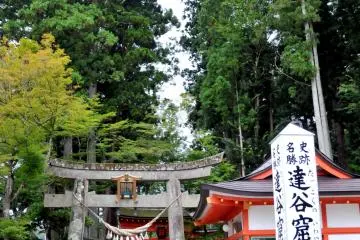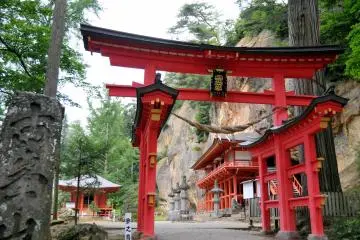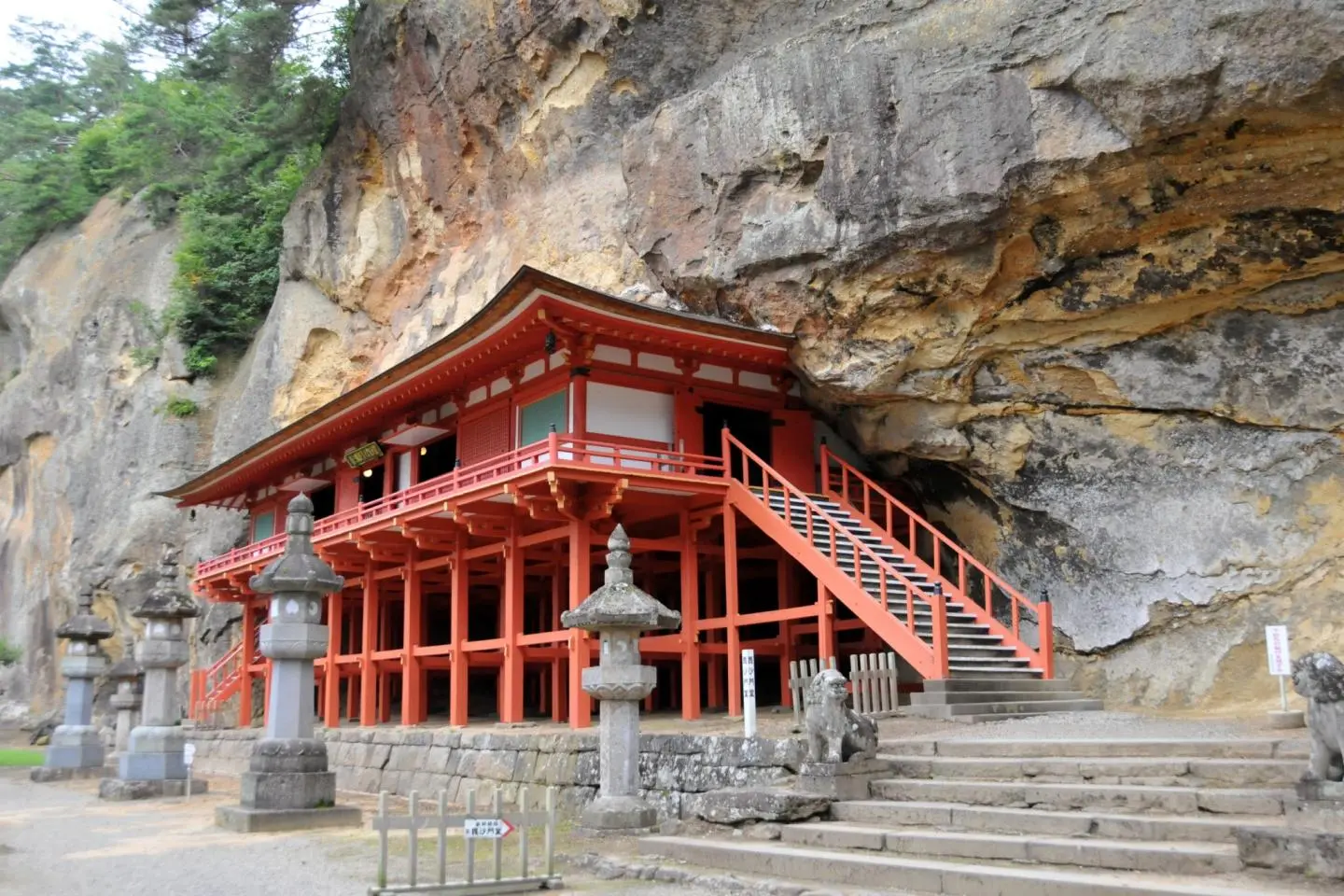

For anyone visiting the World Heritage sites of Hiraizumi, a quick stop at Takkoku-no-Iwaya Bishamondo is a must. This 1,200 year old temple sits overlooking lovely rice paddies and has few visitors. As the site was originally a Shinto shrine, three beautiful torii gates welcome visitors. Within the grounds, the main hall is built into the rock-face and was modeled after Kyoto's famous Kiyomizudera. Be sure to hunt around for the large, impressive Buddha face carving - I completely missed it on my visit!
- 1 min read
Hiraizumi Takkoku-no-Iwaya Temple
1200+ years of history - built into a rock wall
By Sandra Isaka
Community writer
When the temple was first built, there were 108 images of Bishamonten, the Guardian of Buddhist Law, enshrined here. The 33 that remain are unveiled every thirty-three years. The last unveiling was on April 17-18, 2010.
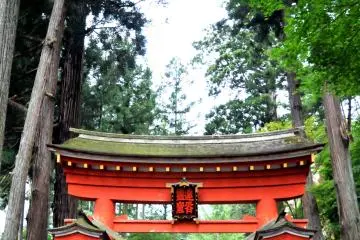
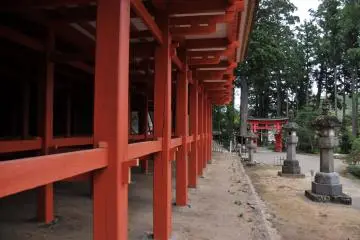
Visitors pass through three torii gates - the first dates back to the Edo Period and is made of locally quarried stone. The others are bright vermilion-painted wood.
The path leading to the main hall is surrounded by ancient cedar trees.
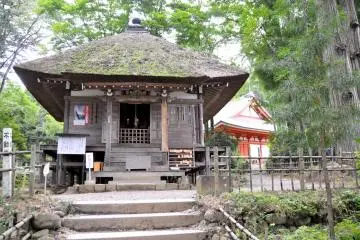
Visitors pray to Fudo Myo-o, the protector of Buddhism and one of the Wisdom Kings, at this thatched roof sub-temple building.
Takkoku-no-Iwaya is one of the rare examples of 'shimbutsu konsai', a unique combination of temple and shrine.
The pillars of the main hall are painted vermilion red to represent the color of the sunrise.
A statue within the grounds. Note the skull on the end of his spear.
Looking out from the main hall, over the Gamagaike, at the surrounding rice paddies. Gamagaike means 'Toad Pond'.
A bridge over Gamagaike to the Benten-do, a small shrine dedicated to the Goddess Benzaiten - the only female member of Japan's seven lucky gods.
Write your wish on this sword-decorated emma, tie it up, and pray to the deities here for help in making it come true.
The temple is open from 8:00 - 17:00 (18:00 in summer). It is closed on the day after a holiday, during the New Year's holidays, and on Mondays (Tuesday if Monday is a holiday). The entrance fee is 300 yen.
Join the discussion
Elizabeth S
3 years ago
Great photos that evoke the atmosphere of the place. I was there one rainy summer afternoon and it was so quiet with no other visitors. It's startling to see a historic spot like this uncrowded and quiet.
Elena Lisina
6 years ago
May I ask how it can be reached? Only by a car?
Elena Lisina
6 years ago
Good shots! Nature in Tohoku is grand, indeed.
Justin Velgus
10 years ago
I loved this place when I went! I hope to go back. Great pics!
Thank you, Justin! This temple is often overlooked by visitors to Hiraizumi. I hope more people will stop there in the future.
5 comments in total
Book your trip
Find a nearby hotel
Explore some of the best nearby hotels and deals for the perfect place to stay in Japan.
Top Articles
-
1Visiting Scenic Yanagawa On the Water’s Edge
Fukuoka - Sponsored -
2Adventure Travel For All In Chitose
Hokkaido -
3Exploring Japan Through the Seasons: Three First-Time Classic Tours
Culture -
4Aichi Prefecture: The Heart of Japan’s Umami Culture
Aichi - Sponsored -
5A Snowy Retreat at Kamenoi Hotel Tazawako, Akita
Akita - Sponsored -
6How to Handle Illness Or Injury While Traveling in Japan
Planning - Sponsored -
7See Southern Japan with Kirishima As Your Gateway
Kagoshima - Sponsored -
8Experience Oarai: A Quiet Fishing Town Blessed by the Bounty of the Sea
Ibaraki -
9A Relaxed Mix of Sightseeing, Dining, and Shopping in Kanonji
Kagawa - Sponsored -
10Three Charms to Experience in Fukui: Zen, Taste & Adventure
Fukui - Sponsored
-
1Guide to Bringing Medicines Into Japan
Planning -
2Bad Bunny Debí Tirar Más Fotos World Tour
Tokyo -
3The Ultimate Guide to Thrifting in Tokyo
Shopping -
4Guide to Suica Cards
Transportation -
5January Grand Sumo Tournament (Tokyo)
Tokyo -
6Your Name: Real-Life Locations in Tokyo
Tokyo -
7March Grand Sumo Tournament (Osaka)
Osaka -
8The History of Japan: Era by Era
Culture -
9Winter in Japan: Your Seasonal Guide
Planning -
10Ghibli Museum: How To Get Tickets (2026 Guide)
Culture